HPYGN D-Handle Cable Attachment: what 260 kg buys
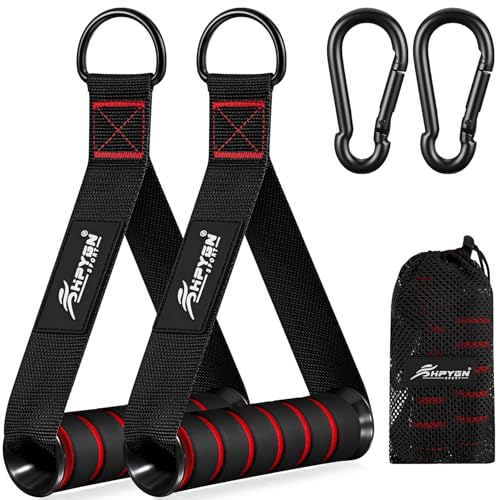
The right answer if the handles that shipped with your cable machine have gone hard and slick. Not an upgrade if yours are still fine.
- Rated to hold 260 kg of pull
- Braided nylon straps, triple stitched
- Extra-wide handle opening
- Fits cable crossover, pulley, Smith machine, pilates reformer and chair gym setups
Nobody sets out to buy a cable handle.
You buy one because the pair that came free with a secondhand crossover machine has gone shiny and hard, and every set of face pulls now ends with your hands giving out before your rear delts do.
That is the entire market for the HPYGN D-handle, and it is worth saying up front because a handle is not equipment you upgrade for performance. You replace it when the old one has stopped doing its job. The rest of the cable attachment picks follow the same logic.
We have not had this one in our hands. Everything below is read off the listing and the manufacturer's own copy, and it is labeled as such. When we get a set on a machine, this page changes.
What the HPYGN D-handle spec sheet claims
HPYGN rates the handle to hold 260 kg of pull, with braided nylon webbing and triple stitching through the strap. The opening is described as extra-wide, which on a cable handle usually means it takes a gloved hand or a thick grip without pinching.
That 260 kg number is the one people fixate on, so it is worth being precise about what a static load rating on a strap means: it is the manufacturer's figure for what the webbing holds, not a certified working load, and not a statement about the carabiner, the cable, or the pin on your stack. A handle rated well above your working weight is the correct thing to buy. It is not a reason to feel good about the rest of the machine.
For almost every home lifter, the rating is irrelevant in practice.
If you are doing single-arm rows on a stack that tops out at 90 kg, any competently made nylon handle clears the bar by a wide margin. The rating matters as evidence that the strap was built with margin, not as a number you are going to approach.
Where it actually fits
The listing names cable machine crossovers, pulley systems, Smith machines, pilates reformers, functional trainers and chair gyms. That breadth is not marketing padding, it is just what a carabiner-and-strap handle is: the attachment point is standardized enough that one handle genuinely does move between machines.
The practical version of that claim is narrower and more useful. If you own more than one cable setup, or you train at home and at a gym, one good pair of handles that lives in your bag beats four mediocre pairs bolted to four machines. That is the case for buying these, and it is a better case than the load rating.
Who should not buy this
If the handles on your machine are rubber-coated, intact, and not slipping, you do not need these. A worn handle announces itself: the coating goes glassy, the stitching frays at the D-ring, or the plastic core cracks and starts to bite.
Until one of those is true, this is a purchase looking for a reason.
Skip it too if what you actually want is a rotating handle. A fixed nylon D-handle does not spin, and on high-rep pushdowns some people find that the wrist path fights them. That is a different product, not a flaw in this one.
What we will check when we get a pair
This sits with the rest of our gym accessory coverage, and it is the first page that changes when a pair arrives.
The stitching at the D-ring under load, whether the webbing softens or stays stiff after a few weeks, and how the grip behaves with chalk on it. Those are the three things that separate a handle you keep from one that goes in a drawer, and none of them are on a spec sheet.
Made up your mind?