Home Battery Backup vs Generator for a Real Outage
Buy the battery if your outages run hours and you cannot safely run an engine where you live. Buy a generator if they run days, because a battery's capacity is fixed the day you buy it and a generator's is however much fuel you can get hold of.
What decides it: Whether the outage ends before the battery does.
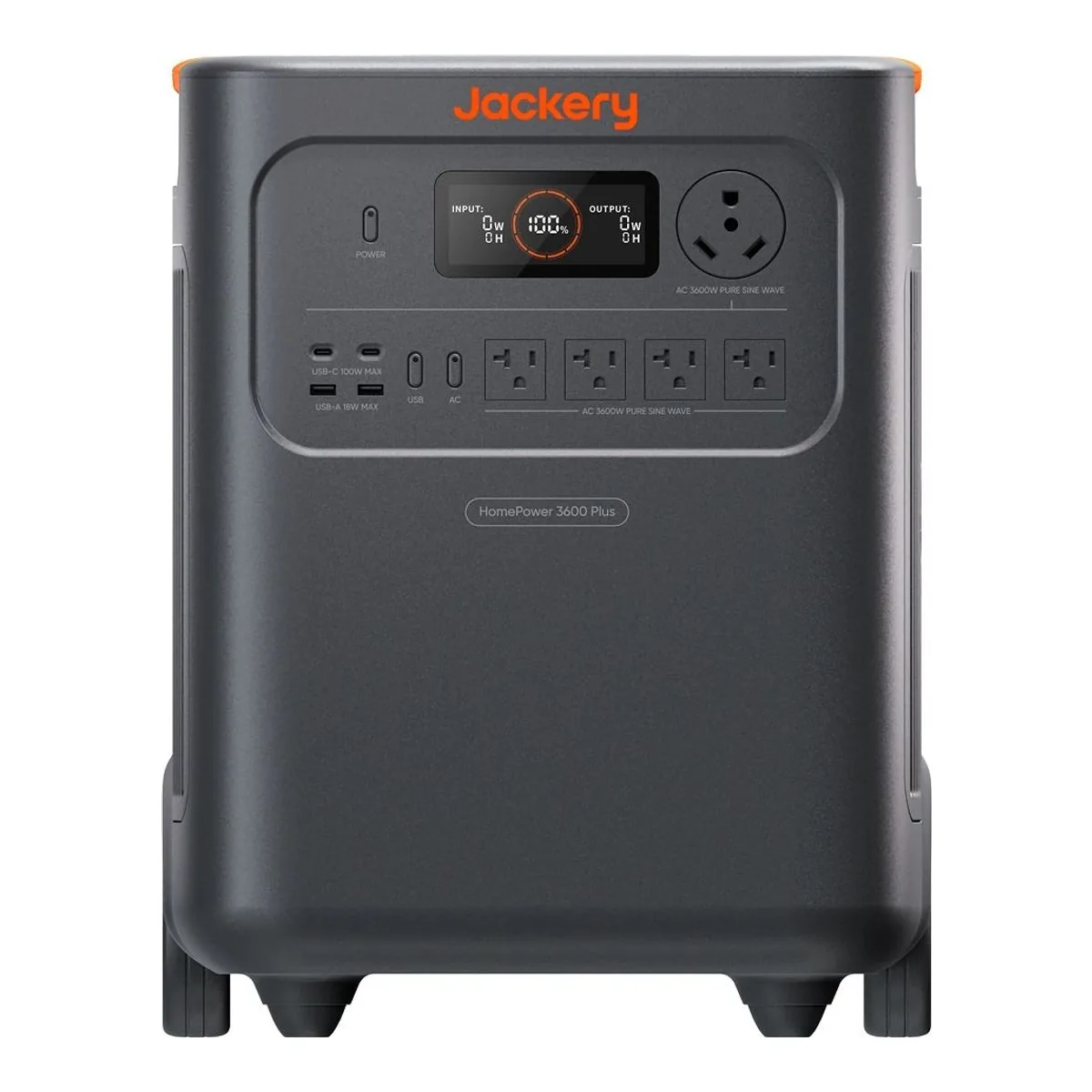
Home battery backup
Pick this if your outages run hours rather than days, you live somewhere an engine cannot safely run, and you want the load carried the instant the grid drops.
Portable gas generator
Pick this if your outages run days, you have somewhere outdoors and well away from a window to run it, and you can get fuel while everyone else is trying to.
No pick here yet. The specs below are the type, not a product.
Standby generator
Pick this if you will pay an electrician, pull a permit, and hand the whole decision to a machine that starts itself at three in the morning.
No pick here yet. The specs below are the type, not a product.
| Home battery backup | Portable gas generator | Standby generator | |
|---|---|---|---|
| Capacity | 3584Wh, expandable to 21kWh | As much fuel as you can safely store | Unlimited, on a natural gas line |
| AC output | 3600W continuous, 7200W surge peak | 1600W to 6800W across the shelf we measured | 14kW on the whole home unit Amazon lists |
| AC recharge | 2.5 hours 0 to 100% from a wall outlet, measured | Refuel in minutes, if the stations have power | None. It feeds itself from the gas main |
| Weight | 77 lbs | Not published | Not published |
| Battery | LiFePO4, 6000 cycles to 70%+ capacity | None. It burns gasoline, and some models propane | None. Natural gas or propane |
| Warranty | 5-year manufacturer warranty | Not published | Not published |
An outage ends when the utility says it ends. Nothing in this comparison changes that, and every argument below is really about what happens if it ends later than you hoped.
Most published takes on home battery backup vs generator are cost comparisons. That is a fair way to look at it and it is not the way we can look at it, since this site does not publish prices. What is left once you remove them turns out to be the more useful half anyway: a battery holds a fixed number of watt-hours that were decided on the day you bought it, and a generator holds however much fuel you can physically get into it.
Home battery backup vs generator, decided by how long the outage runs
Take a real unit. The Jackery HomePower 3600 Plus carries 3584Wh, of which about 3,190Wh reaches the outlets after inverter losses that an independent lab metered at 89 percent. A refrigerator averaging 60W lives on that for a bit over two days. Add the expansion packs and the same lab measured 9.5 days.
Nine and a half days is a long outage. It is also a ceiling, and what every whole home battery backup has in common is that the ceiling does not move when the storm turns out worse than forecast.
A generator has no ceiling. It has a fuel problem instead, which is a different shape of problem: a five gallon tank runs eight to twelve hours, so a multi-day outage means somebody driving to a gas station that may not have power to run its pumps, with cans, repeatedly, at night, in the weather that caused all this.
So the question is not which technology is better. It is whether your outages end inside the battery, and only your own utility can tell you that. If four hours twice a winter is your history, the ceiling never gets tested. If you lost power for a week the year before last, it already has been.
Solar changes the arithmetic and does not remove the ceiling. Panels refill a battery during daylight, which turns a two day runtime into something closer to indefinite in summer sun, and into very little during the three overcast days that follow an ice storm.
The carbon monoxide problem is not a footnote
CPSC estimates that, in its words, "nearly 80 members of the public die each year from carbon monoxide poisoning caused by portable generators." Roughly 790 such deaths have been recorded since 2008. The agency's own framing puts them squarely in this scenario: portable generators, which many consumers use during power outages, emit very high rates of CO.
This is the argument for a battery that has nothing to do with watt-hours. A battery emits nothing, makes almost no noise, and can sit in a hallway. A generator has to be outdoors, well away from windows, doors and vents, and the people who die doing this were mostly running one in a garage or a porch during weather that made outdoors unappealing.
If you live in an apartment, a townhouse with no yard, or anywhere the only sheltered spot is attached to the building, the generator side of this comparison is closed and the battery wins by default.
Standby generators are a different purchase entirely
A whole home standby unit is not a bigger portable. It is plumbed to your gas main, wired to an automatic transfer switch, and it starts itself when the grid drops whether or not anybody is home. Nothing to refuel and nothing to carry.
The cost of that is not only money. It needs an electrician, an electrical permit and an inspection in essentially every jurisdiction, because it is permanently attached to both your panel and a fuel line. That is weeks of lead time, and none of it is work you do yourself.
It also does not sit in a warehouse waiting for you: the 14kW whole home unit Amazon lists came back on a lead time rather than in stock when we checked the catalog, which is the normal state of this product and worth knowing before you plan around a delivery date in hurricane season.
What each one costs you in attention
A generator asks for maintenance you will forget. Fuel goes stale, carburetors gum up, and the failure mode is a machine that will not start on the one morning it was bought for. Run it under load a few times a year or accept that risk.
A battery asks for something subtler. That same Jackery draws about 34W just sitting there with the inverter on, which empties a full charge in roughly four and a half days of doing nothing at all. Charge it in June for hurricane season, walk away, and it is flat by July. Nothing about it will look wrong. There is no alarm for this, because the battery has no idea it was bought for an emergency.
Neither of those is a reason to pick one over the other. Both are reasons the thing you bought does not work when you need it, and both are solved by a recurring calendar entry rather than by buying better hardware.
The standby unit is the only one of the three that tests itself, which it does on a weekly cycle you can hear from the yard. That is the actual argument for it: it is the option that does not depend on you remembering.
Who should skip all three of these
Most people, honestly. Go and list what genuinely fails during your outages, because for a lot of households the whole power outage backup problem is a phone at 12 percent, a dead router and no lights. None of that needs 3584Wh or an engine. A station a fraction of this size handles all three for two days and lives in a closet, and the smaller stations we compared are sized for exactly that.
Buy at this tier when you have named the appliance you are protecting and put a number on how long it has to survive. A freezer full of food, a sump pump in a basement that floods, a CPAP, medication that has to stay cold. Those are purchases. "Being prepared" is not, and it is how people end up with a heavy box they never charge.
And if the appliance you named turns out to run on 240V, neither a single battery nor a portable generator is the answer, which is where the rest of the power station shelf stops being useful and an electrician starts being the next call.